Enter
To perform a search
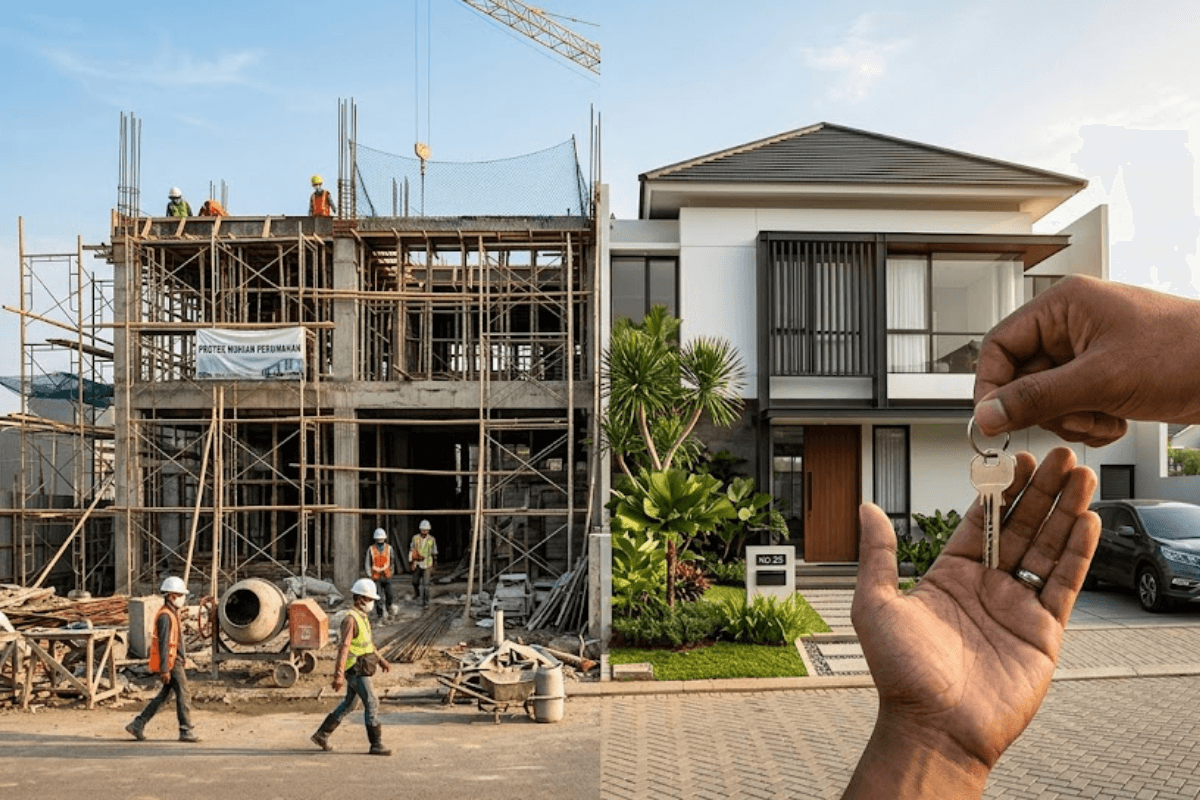
When you're visiting a housing development, sales representatives often tend to steer you toward either an indent home or a ready stock home. However, the difference between the two can have a significant impact on your finances.
An indent property, for example, has the potential to appreciate by 20–40% once the development is fully established and its facilities are completed.[1] This level of capital appreciation is generally less likely with ready stock units, whose prices already reflect current market value.
That doesn't necessarily mean one option is better than the other. Before taking a salesperson's advice at face value, it's worth understanding the key differences.
So, what exactly is an indent home?
Simply put, it's a property purchased while it's still under construction or sometimes even during the planning stage. Buyers typically sign a Sale and Purchase Binding Agreement (PPJB) first, followed by the Sale and Purchase Deed (AJB) once construction is completed.
A ready stock home, on the other hand, is a completed property that's already built. Since the unit is physically available, the AJB can be executed immediately without waiting for construction to finish.
However, developers cannot legally market an indent property that's only an idea on paper. Under Law No. 1 of 2011 on Housing and Residential Areas, reinforced by Minister of Public Works and Housing Regulation No. 11/PRT/M/2019, developers may only market indent units after meeting several legal requirements:[2]
Clear land ownership status
Building Approval (PBG) has been issued
Public infrastructure and utilities are available
Construction progress has reached at least 20%
These regulations ensure that buyers are purchasing a genuine ongoing project not merely promises in a brochure.
The waiting period for an indent home generally ranges from 12 to 24 months, depending on the project's scale, although you should always confirm the timeline directly with the developer since it varies considerably.[3]
Each option comes with its own risks. Indent homes may face delays in handover or changes to specifications, while ready stock homes typically cost more and offer very limited customization.
Despite the possibility of construction delays, indent properties remain attractive for several compelling reasons.
Developers rely on early buyers to help finance construction, which is why launch prices are usually much lower. The earlier you purchase, the greater the price advantage compared to buyers who enter later.
Since only a limited number of units have been sold during the early stages, buyers have more flexibility to choose:
Preferred orientation
Proximity to facilities
Corner (hook) units or standard lots
As construction progresses, these premium choices become increasingly limited.
Indent properties can increase in value as development progresses. However, appreciation is not guaranteed—it ultimately depends on project execution and market demand.
Payments are typically made in stages according to construction progress, making the initial financial commitment lighter than paying for a completed home. This staged payment structure helps compensate for the waiting period.
If indent homes reward patience, ready stock homes cater to buyers who prioritize immediate certainty.
Some of their main advantages include:
Once the handover is completed, you can move in immediately without simultaneously paying rent for your current residence while servicing your new mortgage.
These overlapping housing costs are one of the most common hidden expenses experienced by indent buyers.
Since the house has already been completed, there's no uncertainty regarding construction schedules.
What you see today is exactly what you'll receive.
Rather than relying on brochures or scale models, you can personally inspect:
Construction quality
Room layout
Building finishes
Overall workmanship
This greatly reduces the risk of disappointment caused by differences between marketing materials and reality.
That said, don't assume a completed house is automatically flawless.
Before signing the final agreement, always inspect the property carefully, paying particular attention to:
Hairline wall cracks
Roof leaks
Electrical installation quality
Even completed houses can have issues that aren't immediately obvious during a casual walkthrough.
Does choosing one development mean committing to only one purchase scheme?
Not at all.
At Jakarta Garden City, both options are available.
If you prefer an indent property, Florence Village offers a more affordable entry point, with installment plans starting from approximately IDR 5 million per month, making it ideal for buyers who don't mind waiting for construction.
If you prefer a ready stock home, Essence offers completed units with installments starting from around IDR 10 million per month, located in one of the development's most strategic front clusters.
As for the construction delays commonly associated with indent properties, the risk is generally much lower when purchasing from a reputable developer with a proven track record of completing projects successfully.
This stands in stark contrast to stalled developments that occasionally occur with smaller developers lacking an established portfolio.
There is no universally "better" choice between an indent home and a ready stock home.
The real question is which one better matches your priorities:
Lower purchase price or immediate certainty?
Greater freedom in selecting your unit or a house that's already completed?
Every advantage comes with its own trade-offs. Neither option is automatically more profitable without considering your financial situation, timeline, and personal needs.
That's why understanding the risks and benefits of each purchase scheme before signing any agreement can help you avoid costly regrets later on.
If you're still deciding between Florence Village and Essence, consult the Jakarta Garden City team to find the option that best suits both your lifestyle and your financial goals.

| Monday - Saturday | : | 09:00 - 20:00 WIB |
| Sunday | : | 09:00 - 21:00 WIB |